
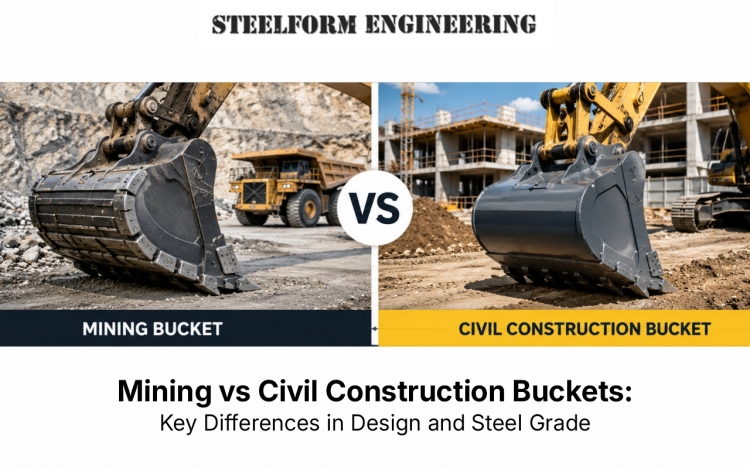
The bucket of an excavator is an important part of the machine’s productivity, longevity and efficiency when digging and moving material. While there are many buckets that seem to be alike when you look at them from afar, there are many differences between excavator buckets for civil construction jobs and those made for use in mining. These differences have to do with the way they are engineered, the grade of steel used to make them, the amount of wear protection on each bucket, and how each performs.
If you are a contractor, miner, or fleet manager and wish to prolong your equipment's life and minimise downtime, you need to know the differences between the buckets used for mining and civil construction jobs, how you can choose the right steel grade type, and why it is so important for Australia’s harsh mining environment to use a heavy-duty mining bucket.
The difference between mining excavator buckets and civil construction excavator buckets is based upon where the bucket will be used. The different conditions at the sites cause each type of bucket to have unique demands placed on it.
Civil construction buckets are generally intended for lighter duty and more versatile applications, including the following:
Mining buckets are specially engineered for extremely heavy-duty applications such as the following:
Mining is a much harsher environment than civil construction, so mining buckets must be built with much higher levels of structural reinforcement and premium wear-resistant materials and have more advanced bucket designs than civil construction buckets.
While there are many different types of excavator buckets, one of the biggest differences between rock buckets and general-purpose buckets is their design intention and the types of materials they are designed to dig.
General-purpose buckets are designed for the majority of civil construction projects that consist of soft- to medium-density materials. The general-purpose buckets of a civil construction project will typically include handling of soil, landscaping, moving bulk materials and digging utility trenches.
This type of bucket is designed to provide the efficiency and versatility required for all general civil construction applications, with very little thought to their durability.
Rock buckets are designed specifically for extreme abrasion and heavy-impact applications. Characteristics of a rock bucket include reinforced sidewalls, heavy-duty wear plates, higher-strength cutting edges, additional structural ribs and higher-grade steel construction.
Rock buckets are commonly used in quarrying and mining applications where bucket failure could result in significant loss of production and many hours of expensive downtime.
The type of steel used during the construction of an excavator bucket has a significant impact on the bucket’s ability to perform as intended. The steel grades used in buckets in civil projects and those used in mining projects are one of the main factors affecting the wear life, strength and anti-cracking ability of both types of buckets.
Civil construction buckets are manufactured with a standard type of high-strength structural steel that offers
These types of steel tend to perform well under conditions with low impact but will wear out faster in an environment that is highly abrasive.
Mining buckets require premium-grade wear-resistant steel that is built to endure ongoing impact and abrasion while being able to
Many mining buckets use advanced wear plate materials, such as hardened alloy steel, in order to protect the area of the bucket where wear will occur at a high rate.
The difference in the types of materials used for constructing mining buckets and civil construction buckets is one of the primary differences in the various grades of steel used for constructing excavator buckets in the different industries.
When choosing between a civil construction bucket and a mining bucket, there are numerous factors to consider:
Operators who understand the unique characteristics of the mining vs construction excavator buckets, including the variations in excavator bucket steel grades, will make an educated choice about which attachment is best for maximum durability and efficiency.
At Steelform Engineering, we lead the industry by providing guidance and manufacturing solutions through our expert knowledge and experience. We partner with contractors to help them evaluate what type of bucket is needed for their application and deliver superior productivity-enhancing buckets for their applications.
Contact Steelform Engineering today to find out how you can put an end to wasting time and money with inadequate equipment.


