
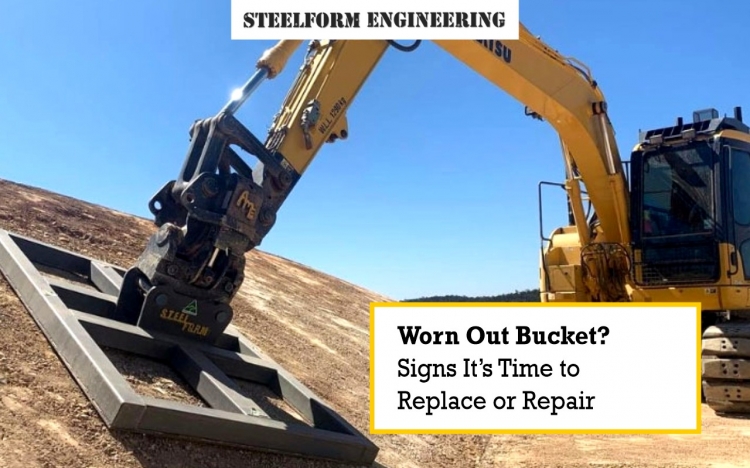
For any operator, an excavator bucket is more than just an attachment; it's the primary tool that gets the job done. Whether you're digging, loading, or moving materials, the performance of your bucket directly impacts productivity, efficiency, and ultimately, your bottom line. At Steelform Engineering, we understand the demanding conditions your equipment faces, and we know that even the toughest buckets eventually show their age.
So, how do you know when your trusty bucket is ready for some attention? Recognising the key bucket damage signs is crucial for making an informed decision between excavator bucket repair and a complete replacement. Ignoring these signs can lead to decreased performance, increased fuel consumption, and even dangerous failures on site.
In this blog, let's dive into the indicators that it's time to assess your excavator bucket.
Keeping an eye on your bucket's condition should be a regular part of your pre-operation checks. Here are the critical signs that signal it's time to replace the bucket or at least consider a professional repair:
Cracks are perhaps the most concerning of all bucket damage signs. They can appear in various locations and indicate significant stress on the bucket's structure.
Decision Point: Small, localised cracks, especially in non-structural areas, might be candidates for excavator bucket repair through welding. However, widespread cracking, cracks in critical load-bearing areas, or cracks that reappear after repair attempts usually mean it's time to replace the bucket.
The teeth (or cutting edge, if it's a straight-edge bucket) are your bucket's primary point of contact with the material. Their condition directly affects digging efficiency.
Decision Point: Replacing worn or missing teeth is a common and often straightforward excavator bucket repair. This is usually a cost-effective way to restore digging performance. However, if the entire lip where the teeth attach is severely worn or damaged, it might influence when to replace the bucket, as repairing the lip can be extensive.
The lip and side edges of your bucket are designed to withstand significant force. Any deformation here is a red flag.
Decision Point: Minor bending on edges might be repairable by skilled fabrication. However, significant deformation of the lip or widespread structural distortion are strong indicators for when to replace the bucket. Trying to straighten severely bent thick steel can further weaken it.
Deciding between excavator bucket repair and replacement depends on several factors: the extent of the damage, the age of the bucket, the cost of repair versus a new bucket, and, crucially, safety.
At Steelform Engineering, we specialise in providing robust and reliable solutions for your heavy equipment needs. We can help you assess the damage to your bucket and advise on the most cost-effective and safest course of action. Often, a timely repair can significantly extend the life of your bucket, but there comes a point where investing in a new, high-quality bucket from Steelform Engineering is the smarter, more efficient, and safer choice.
Don't let a worn-out bucket slow down your operations or compromise safety. Regular inspection and proactive maintenance are key. If you notice any of these bucket damage signs, contact Steelform Engineering today. We're here to help you get the most out of your machinery.


