
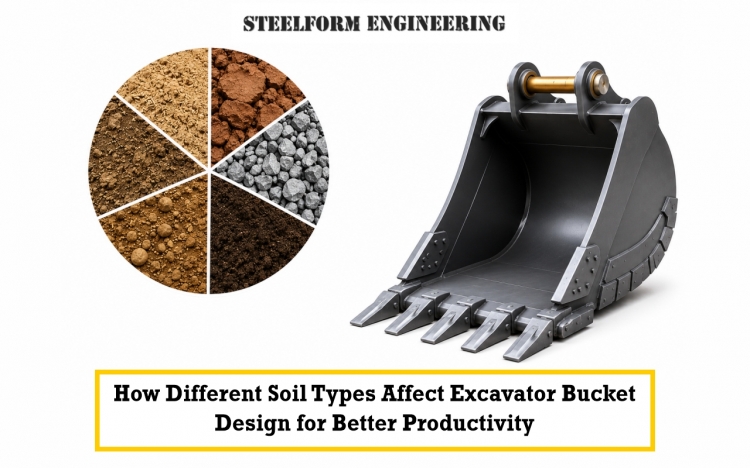
Excavators can carry out various tasks, but no single bucket can give the same level of performance in all types of soil. Be it stiff clay or soft sand, any soil type will directly affect efficiency while digging, wear of the bucket, fuel consumption, and the excavator\'s performance.
Therefore, bucket design is as important as the excavator itself. A bucket designed to match soil material allows for increased penetration, reduced machine strain, less wear, and faster execution of projects.
At Steelform Engineering, we know that different types of construction can be carried out in entirely different conditions. Regardless of whether it is construction, mining, civil engineering, or agriculture, one should choose the right bucket design for the specific ground conditions.
Each type of soil has its own set of characteristics, which influence how well an excavator bucket functions. The excavation performance is affected by many aspects, such as density, humidity, abrasiveness, and size of the soil.
If the bucket is not suitable for excavating the specific soil type, operators may encounter the following:
Choosing the right bucket for digging helps to improve the work of an excavator and save the lifespan of both the bucket and the machine.
Soil conditions define certain engineering characteristics. It is not enough to simply find a bigger or heavier bucket but to have certain features to maximise the efficiency of the excavator tool.
The way a bucket is designed determines how much load it can carry. The shape of the side profile affects how easily the materials can be loaded into and removed from the bucket. The proper dimensions of an excavator bucket ensure that there is a maximum fill of whatever load in each scoop taken.
Tooth configuration affects drastically both breakout power and penetration ability. Twin tiger and chisel teeth can break through problematic and dense ground. Spade teeth can create a more refined finish when working in most softer soils and are also durable enough.
High-tensile steel is essential for making any effective earthmoving attachment. Engineers often rely on special resistant steel for making such important parts as cutting edges and side cutters. Heel covers are used for reinforcing hard impact places of the attachment and do not add any unnecessary weight.
Wear protection comprises wear strips and wear plates that are used in other parts of the equipment. The use of lip covers makes the equipment less susceptible to wear and tear.
The particular soil conditions you encounter on a daily basis determine the specific requirements for your attachment to match.
Clay soil is highly sticky; hence, it adheres to metal surfaces and does not release the load properly. Engineers solved the problem with their design of a proper bucket shape so that materials can be released properly. This keeps the bucket clean at all times and increases the efficiency of unloading.
2. Sandy Soil
The sandy soil is highly mobile, thus creating high wear on the steel used in the bucket. Considering this, the design must include wear-resistant steel and additional wear bars at the bottom of the bucket. The bucket capacity should also be optimised so that the material can be collected effectively without creating any waste.
3. Gravel
Gravel soil has different-sized particles; however, wearing and impact are moderate. Side walls and stronger cutting edges must be reinforced so that the design can withstand the constant wearing. Durable teeth must be used in order to penetrate soft, loose soil.
4. Rock
Rock delivers high impacts and requires a great breakout. Durable rock buckets are made from high-quality steel and have a heavily reinforced lip design. Aggressive tooth profiles maximise the power of your equipment to smash the dense material. This special construction prevents failure of the structure in tough excavating operations.
Wet dirt makes your bucket heavier and interferes with emptying. Wide mud buckets have an open design and a completely smooth bucket surface. Special consideration of drainage issues and reduction of sticking areas allow the mud to exit your bucket smoothly.
Pre-made buckets are not always appropriate for your unique conditions. Custom-made buckets are made for your model of machine as well as the type of substance you are using. Added to that, the design is done to meet your demands and to ensure better cycle times. Custom-made buckets can be used in mining, roadworks, farming, quarrying, pipelines and other industries.
If your fuel consumption is high, it is the first indicator that something is wrong with the installation. If the bucket cannot penetrate the ground or you need to replace the teeth regularly, it shows that you do not achieve proper breakout force. If there is constant sticking of goods in a bucket, unevenly worn plates, and cracks, all these indicate that enough attention should be paid to the design of the bucket to ensure enhanced excavator productivity.
Before you make any purchase, you should consider the nature of the local soils and their hardness. The presence of high humidity and abrasion will require the use of different types and designs of equipment. Ensure that the chosen attachments fit the specifications of the equipment and account for the total expected running time. Selecting the best type of excavator bucket design for the type of soil you work with will help you optimise production to deliver desired results.
Ground conditions play a big role in the performance of your attachment on the site. The right type of excavator bucket ensures maximum productivity and minimises fuel consumption and maintenance expenses. It prolongs the lifespan of the equipment as well.
At Steelform Engineering, we manufacture high-quality excavator buckets that are tailored to meet the demanding requirements of Australian industry and tough soil conditions. Regardless of whether you need a standard bucket for general construction purposes or a custom bucket specifically designed for particular conditions, we will provide you with high-quality solutions that ensure effective functioning, efficiency and service life of the product.


