
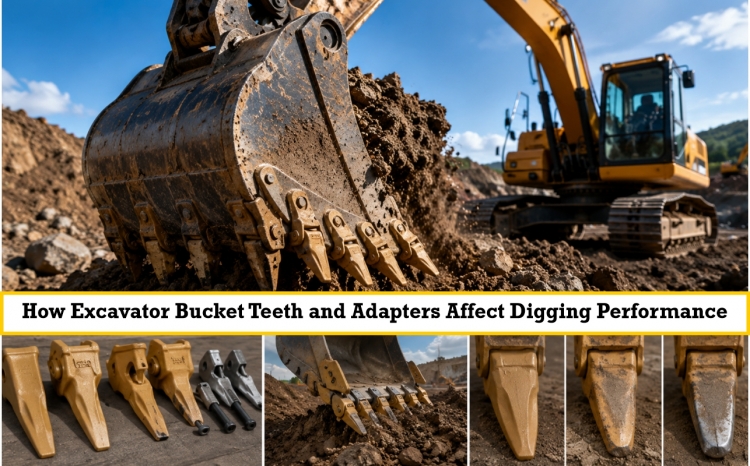
When an excavator is working through tough ground, the bucket teeth are the first point of contact with the material. Their condition, shape and fit can have a noticeable impact on how easily the bucket penetrates the ground, how much force is required and how quickly components wear.
Whether you work with standard soil, clay, gravel, or other materials, proper knowledge of excavator teeth will help you choose the right equipment for maintaining your excavator.
The teeth on excavator buckets are there to penetrate the surface of the material to be excavated. Their shape and angle determine the digging mechanism’s performance.
The more optimised the tooth geometry is, the easier it is for the excavator to penetrate the ground. Also, the teeth have a great effect on other parameters such as breakout force, wear resistance, digging efficiency and more.
In particular, the choice of bucket teeth affects the following indicators:
Excavator bucket adapters are used to secure the teeth on the bucket. Therefore, they are responsible for transferring the breakout force from the bucket to the teeth directly. The proper choice of adapters is essential for achieving optimal performance of the excavator digging system.
A poorly chosen adapter will not allow the teeth to hold the bucket properly, which will lead to reduced performance and accelerated wear. In addition, when selecting new teeth, it is essential to consider the condition of the adapters since worn excavator attachments will fail to hold the teeth.
It is almost impossible to give a universal answer as to which teeth to choose for an excavator since the choice of teeth depends on the material being dug.
In particular, the following types of excavator bucket teeth are used:
Besides these three main types, there are also specialised heavy-duty teeth for digging highly abrasive materials. The choice of teeth depends on the hardness of the ground and the type of work being done, which also affects the working conditions of the teeth.
The more abrasive the material is, the more wear and tear the teeth will experience during operation. It is necessary to take this factor into account when choosing teeth so that they can withstand the working conditions. In other words, it is not enough to just choose the heaviest possible teeth for an excavator: one needs to choose the optimal type for the given material.
The correct excavator tooth selection begins with identifying the requirements and understanding what needs to be achieved with the machine.
Considerations include:
For example, the use of an excavator tooth designed for penetration in hard ground will produce differing results from one designed for greater levels of abrasion resistance. Selecting the cheapest option is unlikely to provide the longest service life or penetration capability for the machine.
Excavator bucket teeth are subject to gradual wear and will eventually need replacing. However, continued use of excessively worn teeth can cause a reduction in penetration capability or cause additional wear on the machine.
Common signs that excavator bucket teeth need replacing includes:
Checking excavator teeth on a regular basis will help to identify issues early.
It can be difficult to know when excavator teeth, or indeed adapters, should be replaced. As a general rule, excavator teeth, and any components subject to wear, should be replaced when excessive wear begins to impact penetration capability, fit or cause additional wear on related components. Waiting until excavator teeth have worn completely should be avoided, as this can lead to additional wear on the adapters or bucket.
In addition, regular checks should be carried out on excavators operating in abrasive conditions or being used for long periods of time. Replacement of worn excavator bucket teeth, adapters, and excavator buckets should be considered as soon as wear begins to impact performance to avoid unnecessary downtime or additional costs.
The correct combination of bucket, teeth, and adapters should be selected based on the intended use. The components should complement each other and be suitable for the machine and the conditions in which it is operating.
Whether you are using GP buckets, heavy-duty excavator buckets or other excavator attachments, Steelform Engineering has the right excavator bucket teeth, excavator bucket adapters or other related components for your needs.
Our experts at Steelform Engineering will help from selecting excavator bucket teeth and excavator bucket adapters to other excavator attachments. Choosing the correct tooth for the machine, bucket and ground conditions will have a marked benefit on the performance and service life of excavator buckets. Contact us today to discuss your bucket teeth, adapters and wear component requirements.


