
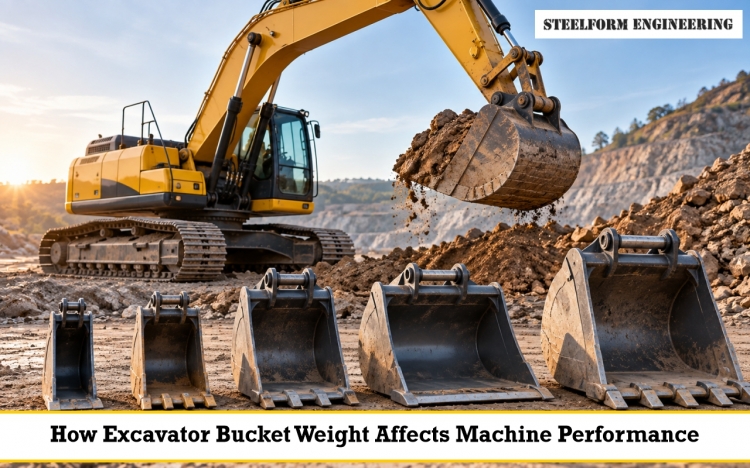
The excavator bucket may appear to be a simple attachment, but the weight of the bucket can seriously affect the effectiveness of the machine. The right bucket should be placed to match with the excavator and the work conditions.
In this blog, we will examine the impact of excavator bucket weight on lifting capability, hydraulic performance, fuel consumption, and machine stability. Moreover, we will clarify how the right choice of excavator buckets, whether GP or mud buckets, improves the performance of your machines.
Every kind of excavator has its own specifications regarding the maximum weight that can be lifted or moved safely. The bucket used in the excavator also adds extra weight to the total capacity.
A heavier bucket would mean that the excavator will have to handle more weight even before the excavation process has begun. A lighter bucket can save a lot of weight for the material being lifted. A lighter bucket is not always the best solution. The bucket needs to be very strong in order to cope with the task.
An excavator's ability to lift is impacted by various factors such as the size of the machine, the position of the boom and arm, the hydraulic system of the machine and the weight of the load.
When a heavier bucket is used on the excavator, a portion of the machine\'s lifting capacity is depleted by the bucket itself.
For example, if there are two buckets that can lift the same weight, but one bucket weighs considerably more than the other bucket, the former will carry less of the load compared to the lighter bucket.
This becomes more crucial as lifting material goes further in reach and height. There are always specifications on the versatility and capacity of the excavator from the manufacturers depending on the attachments used.
The hydraulic system controls most of the excavator\'s functions, such as lifting of the boom and the bucket. A heavy bucket means more weight added to its work. Though the hydraulic system was developed for fixed weight, using too heavy accessories all the time may lead to less effective performance.
Choosing the right bucket means that the excavator will operate exactly as it has been designed. Using excavator attachments implies the consideration of various factors, including not only the size of the bucket but also its weight, capacity, and compatibility as well.
The weight of a bucket can also affect how much fuel is used. Having a heavier bucket means that the excavator has to deal with a heavier load every time the boom, arm and bucket are moved. If it happens that a machine often uses a large bucket, then the engine and hydraulic system of the machine may be working harder than they would with lighter equipment.
The impact of weight on fuel consumption will vary depending on the model of the excavator, the size of the bucket and the work being done. At the same time, picking a bucket of the correct size and weight for certain tasks will help eliminate the need for carrying extra weight during the working day.
Each job calls for a specific type of bucket, from finding the right size to meeting the excavator’s specifications.
General Purpose (GP) buckets are typically used for standard digging tasks. They can handle dirt, clay and other types of loose materials depending on the design and specifications of the bucket and excavator. The weight and capacity of the GP bucket have to match the excavator’s specifications.
Mud buckets are designed for lighter applications where a wider bucket is needed. As a result of such design and function, mud buckets may be different with respect to weight and capacity.
The right choice depends on the type of materials and working conditions more than on anything else; proper specifications of the excavator should also be taken into consideration.
There is no specific weight for an excavator bucket suitable for all machines and the purpose they serve. Having an excavator bucket that weighs too much can limit the amount of load that can be handled by the excavator, increase its burden and consequently reduce its fuel efficiency and stability. Choosing a bucket based on the fact that it is light may not give you the necessary strength, capacity or durability you need.
The best approach is to consider:
The weight of an excavator bucket can influence the excavator bucket performance. It also determines how many tons an excavator can lift, how much pressure the hydraulic system will require, how much fuel will be consumed, and if the vehicle will remain stable.
Thus, it is important to select the required excavator bucket correctly to ensure maximum performance of the equipment in use.
At Steelform Engineering, the experts will first analyze the job, determining which excavator attachments should be used to perform the required work effectively.
Contact us today to order an excavator bucket corresponding to your machine. Visit Steelform Engineering, and we will assist in making the right choice.


